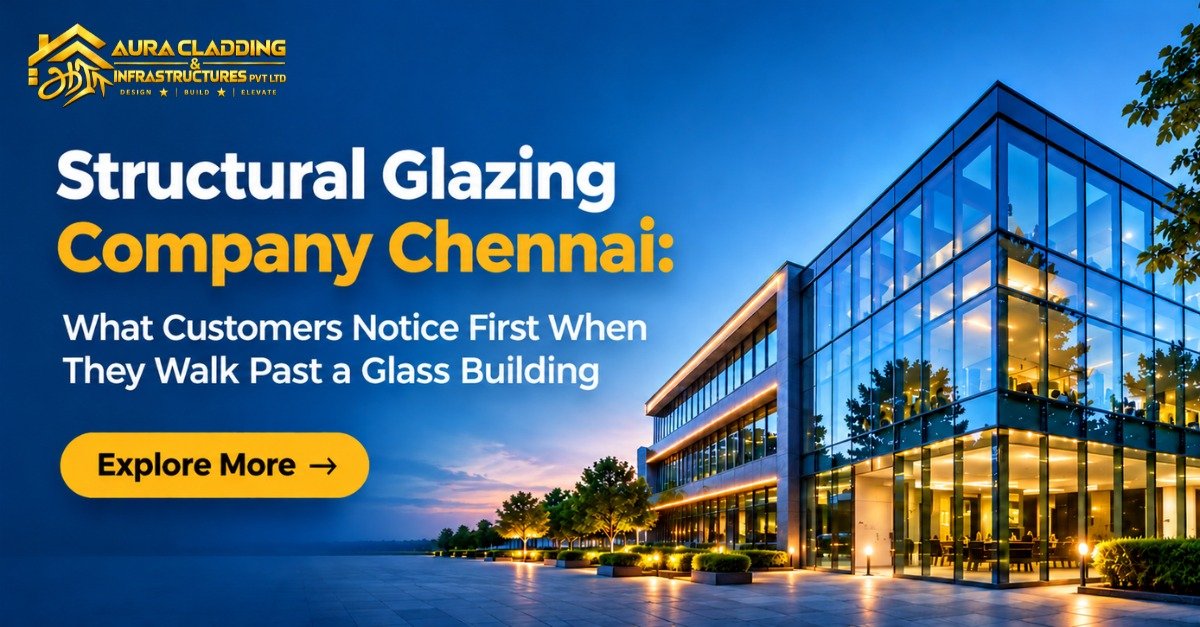
Structural Glazing Company Chennai: What Customers Notice First When They Walk Past a Glass Building
A good structural glazing company in Chennai delivers flat, well-aligned glass with even joints, a facade engineered for wind so it stays quiet, solar control coatings for comfort, and clean detailing that avoids stains. The hidden work, including structural silicone, the sub-frame, anchors and drainage, decides how long the building keeps looking right.
A glass building is judged with more than the eyes
Most people think a glass building is judged by how it looks. In reality, visitors judge it with all their senses, and they do it without realising. They notice how it reflects, how it sounds, how it feels to the touch, and how it glows after dark.
If you are planning a structural glazing project in Chennai, these quiet impressions are what shape how customers feel about your business before they say a single word to you. Here is what they pick up on, and what a good structural glazing company does about it.
The glance
The first thing anyone notices is the surface. Clear, steady reflections of the sky and street make a facade look calm and confident. Wavy or warped reflections make it look uneven, however expensive the glass was.
Structural glazing is popular because the frame seems to disappear. The glass is bonded to the structure with strong structural silicone, so the facade looks like one smooth sheet. That effect depends on accuracy. Panels must be perfectly flat and aligned, and the joints between them must stay narrow and even all the way up. Messy or uneven joints stand out immediately, even to people who know nothing about glass.
The sound
Sound is the quiet giveaway. A well-built glass facade is silent. A poorly built one hums, rattles or whistles when the Chennai wind picks up, and anyone standing nearby will hear it.
Those sounds usually mean the glass is flexing too much or the fixings are loose. The solution is to have the glass thickness and fixing design calculated for the building's height and wind exposure, instead of copying a design from another site. A facade engineered for wind stays still and quiet, and that calm tells visitors the building is solid.
The touch
Walk up to the entrance and the building speaks again through your hands. Does the door swing smoothly? Does the glass feel firm and well fitted? Is the handle solid? Is the glass near the entrance cool and comfortable, or is it radiating heat in the afternoon sun?
Chennai's heat makes this last point important. Glass with a good solar control coating keeps the surface and the interior more comfortable, and it reduces glare and cooling costs as well. At entrances and at head height, toughened or laminated glass adds safety and a feeling of quality the moment someone steps close.
The glow after dark
Many businesses forget that their building also has an evening face. At night, the glass becomes a lantern. Interior lights shine out, and the facade turns into a signal that the business is open and alive.
This is where clean glass and good glazing pay off again. Streaks, water marks and rust trails that were hard to see at noon show up under evening light. Corrosion-resistant fixings and smart drainage design stop these stains from forming, so the facade glows evenly and looks as sharp at 8 pm as it does at 8 am.
The part nobody notices
The most important work in a structural glazing system is the work no visitor will ever see. Behind the glass sit the structural silicone, the sub-frame, the anchors and the hidden drainage paths. They carry the wind load, hold every panel firmly in place and keep monsoon rain out of the building.
When this hidden layer is done well, the building looks effortless for years. When it is done badly, the first sign is a leak, a crack or a panel that shifts, and by then the damage is already done. Good structural glazing depends on:
-
Glass chosen for strength and safety, with a coating suited to Chennai's strong sun
-
Wind loads calculated for the building, not guessed
-
Structural silicone applied by trained hands in clean conditions, with the bond properly tested
-
Corrosion-resistant metalwork that can handle coastal salt and humidity
-
Sealed and drained joints that manage monsoon water instead of trapping it
Choosing the right company
The best way to judge a structural glazing company is to do what your visitors will do. Visit their completed projects in person and use all your senses. Look at the reflections and joint lines. Listen for rattles on a windy day. Touch the doors and feel the finish. Projects that are a few years old will tell you far more than fresh photographs.
A good company will explain how it handles wind, water and heat in simple words. It will offer samples, mock-ups and test reports on larger projects, and it will stand behind its work with a clear warranty and support after installation.
Build a building that feels right
A glass building makes its impression long before anyone walks through the door. The right reflections, the right silence, the right touch and the right glow tell every visitor that the business inside cares about quality.
At Aura Cladding, we help Chennai homeowners, builders and businesses create structural glazing facades that look right, feel right and last. We pay attention to the details people notice and the hidden work that keeps your building strong. Talk to our team about your next project, and let your building make the impression it deserves.
Key Takeaways
- Visitors judge a glass building by its reflections, sound, feel and appearance after dark, often before they enter.
- Flat glass and even, narrow joints give structural glazing its seamless look. Messy joints are noticed immediately.
- Rattles and humming in wind usually mean the glass is flexing or fixings are loose, so thickness and fixings should be calculated for the building's height and wind exposure.
- Solar control coatings keep Chennai's glare and heat down, and toughened or laminated glass at entrances adds safety.
- Corrosion-resistant fixings and good drainage design prevent rust trails and water streaks that show up clearly under evening light.
- Structural silicone, the sub-frame, anchors and drainage paths do the most important work and should be done by trained hands.
- Visit a company's older completed projects in person, since they show more than fresh photographs.