Toughened Glass Railing Chennai: Modern Safety Solutions for Balconies and Staircases
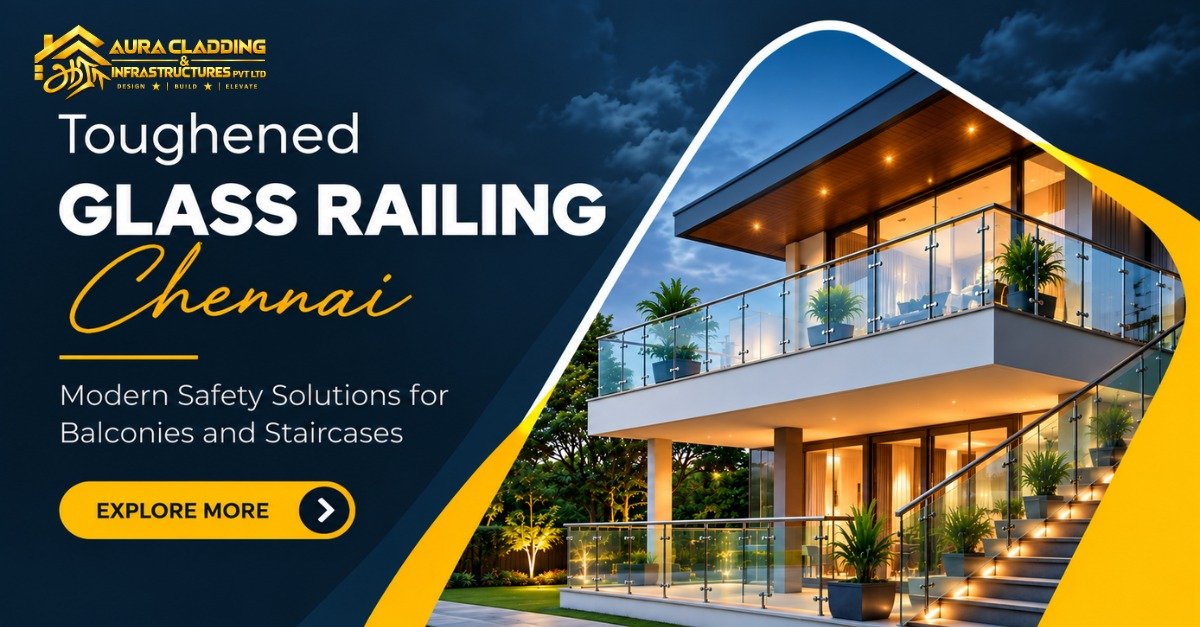
This guide explains how to plan a toughened glass railing for staircases, balconies and terraces in Chennai. It covers frameless and clamped styles for staircases, the importance of polished edges and a handrail, and typical glass thickness of 10 to 12 mm for balconies. It explains why laminated glass is a safer choice for upper floors, why railing height should be checked against local building rules, and why terrace fittings must resist rust in humid, salty air. It also covers easy maintenance and why IS 2553 compliance, strong bases and accurate fixing matter. It ends by noting the benefit of one team handling glass and structure together.
Walk through a modern Chennai home and you’ll notice something. The railings you can see through make rooms feel bigger, brighter and calmer. A glass railing lets light travel across a staircase and keeps the view open on a balcony, while still doing the one job a railing must do: keep people safe.
Here is how that works in three parts of your home, and what to get right in each.
On the staircase
A staircase with glass beside it feels lighter, because the wall that usually closes it in simply disappears. Frameless panels, fixed at the base, give the cleanest look. Panels held by neat metal clamps are a sturdy alternative and are easier to fit into existing stairs.
The details that matter here are small ones. Ask for smooth, polished glass edges, since hands and sleeves brush against them daily. Keep a comfortable handrail along the stairs for grip, as glass alone isn’t made to be held. And since a staircase slopes, panels are often cut to angles. Share exact measurements early, because toughened glass can’t be trimmed once it’s made.
On the balcony
The balcony is where glass railings shine, especially if there’s a view. It also needs the most care, because it faces wind, sun, rain and, in many homes, children and pets.
Toughened glass is the standard starting point, and 10 to 12 mm is commonly used for residential balconies, though the right thickness depends on the panel size and how it’s fixed. For upper floors and high-rise apartments, laminated glass is the safer choice, as two layers are bonded together and the panel stays in place even if one cracks. Railing height also matters, and it’s usually around a metre or more on balconies. Check the exact requirement with your builder or the local building rules before you finalise the design.
On the terrace
A terrace railing sees the most weather and the most people. Glass here should be firmly fixed into a solid base, with fittings that resist rust in Chennai’s humid, salty air. Stainless or properly coated metal parts keep the railing looking clean for years. A top handrail also adds strength and gives the whole line a finished look.
Choosing the style that suits your home
Frameless glass gives you the most open look. Clamped glass gives you a bit more visible structure and is often simpler to install. Glass with a slim metal top rail feels familiar and adds a sense of security. Whichever you pick, it should match the mood of your home, so a quiet, clear look suits modern spaces and a framed look suits more traditional ones.
Keeping it looking new
Glass railings are easy to look after. Wipe the panels with a soft cloth and a mild glass cleaner, rinse the fittings after heavy rain, and have the clamps and fixings checked once a year. A little regular care keeps the railing safe and sparkling.
Safety comes from the details you can’t see
The best glass railing isn’t only about the glass. It depends on the strength of the base, the quality of the fittings and the accuracy of the fixing. Ask your supplier to confirm that the glass meets the IS 2553 safety glass standard, and look for the permanent mark on each panel when it arrives.
At Aura Cladding, Tuffen glass installation works alongside MS fabrication, structural glazing and exterior glazing, so the glass and the structure holding it are planned together. That means cleaner lines, tighter fittings and a railing you can trust.
Planning a staircase, balcony or terrace? Share your photos or measurements with our Chennai team, and we’ll help you choose a glass railing that looks beautiful and keeps your family safe.
Key Takeaways
- Glass railings make staircases and balconies feel brighter and more open while keeping people safe.
- Frameless panels give the cleanest look, while clamped panels are sturdy and easier to fit into existing stairs.
- Ask for polished edges, and keep a comfortable handrail on staircases for grip.
- Toughened glass cannot be trimmed after it is made, so share exact measurements early.
- A thickness of 10 to 12 mm is commonly used for residential balconies, depending on panel size and fixing.
- Laminated glass is the safer choice for upper floors and high-rise apartments, since the panel stays in place even if one layer cracks.
- Check the required railing height with your builder or the local building rules before finalising the design.
- Use rust-resistant fittings on terraces and balconies to cope with Chennai’s humid, salty air.
- Ask your supplier to confirm IS 2553 compliance, and check for the permanent mark on each panel.
- Clean with a soft cloth and mild glass cleaner, and have fittings checked once a year.