Mild Steel Fabrication Chennai: From Workshop Drawings to Accurate On-Site Assembly
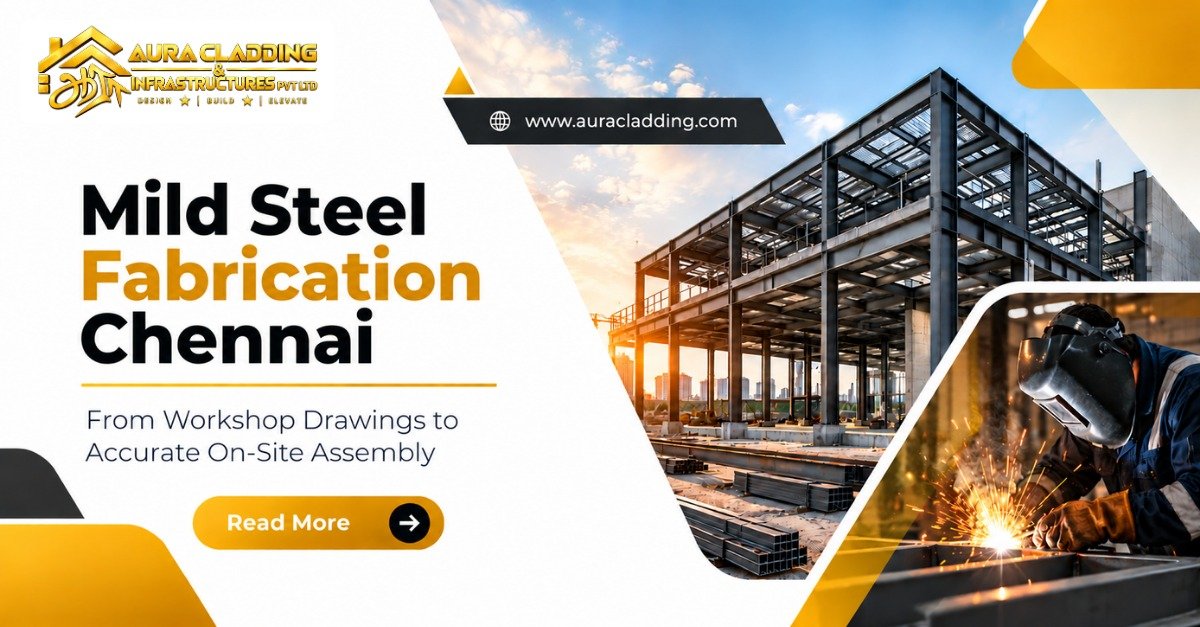
This guide explains how professional mild steel fabrication works in Chennai, from workshop drawings to on-site assembly. It covers why site measurements matter more than architectural plans, why workshop drawings should be approved in writing, how to match steel to the load, and why rust protection should be planned before fabrication. It also explains the value of a trial assembly in the workshop and stage-by-stage alignment on site, and lists the details to share when requesting a quote. It ends with the benefit of one team handling both fabrication and installation.
Mild steel fabrication looks simple from the outside. Steel is cut, welded and fixed in place. But the projects that run smoothly usually succeed because the team let go of a few common beliefs early on. Here are four of them.
“The architect’s drawing is enough to start”
Architectural drawings show the design. They don’t show the real building. Walls lean, floors slope and beams sit slightly off from the plan.
Professional fabricators visit the site first and take their own measurements. They then prepare workshop drawings, which list every section, hole and weld in detail. Once you approve these drawings, everyone works from the same plan. If anything changes later, a revised drawing keeps the team aligned.
“Any steel will do the job”
The right steel depends on what it will carry. A signboard frame and a facade support need different sections and thicknesses. Tell your fabricator whether the frame will hold ACP panels, glass or equipment, and they can choose accordingly. Steel that meets IS 2062 is a dependable choice for most work.
“Paint can wait until the end”
In Chennai, humidity and coastal air reach bare steel quickly. The best protection is planned before fabrication begins. Paint and primer suit covered areas, while hot-dip galvanising suits frames exposed to sun and rain. Cut edges, drilled holes and weld points should be treated too, since rust starts wherever coating is missed.
“Problems can be fixed on site”
They can, but it costs far more time there than in the workshop. A trial assembly before dispatch shows any misaligned hole or clash while the fix is still quick. Each piece is tagged to match the drawing, so the site team knows exactly where it belongs. During installation, the team checks alignment at every stage, so the final frame is level and true.
Details that help us quote accurately
When you contact a fabricator, it helps to share site drawings and photos, the load the frame will carry, preferred steel size if known, paint or galvanising choice, delivery access and your expected timeline.
One team, workshop to site
Steel work goes best when the team that builds the frame also installs it. At Aura Cladding, our MS fabrication service works together with ACP cladding, structural glazing, exterior glazing and Tuffen glass installation. Every frame is built with the final finish in mind, so each part fits smoothly with the next.
Share your drawings or site details with our Chennai team, and we will help you plan steelwork that is accurate, durable and ready to install.
Key Takeaways
- Take real site measurements first, since walls, floors and beams rarely match the plan exactly.
- Approve workshop drawings in writing, and ask for a revised drawing if anything changes.
- Tell your fabricator what the frame will carry so they can choose the right sections and thickness.
- Steel that meets IS 2062 is a dependable choice for most fabrication work.
- Plan paint or hot-dip galvanising before fabrication, and treat cut edges, holes and weld points too.
- A trial assembly in the workshop catches misaligned holes while they are quick to fix.
- Tag every piece to match the drawing so the site team knows where it belongs.
- Check alignment at every stage on site, not only at the end.
- One team handling fabrication and installation means clearer communication and a better finish.